March 20, 2026
Massachusetts Educators Push for Literacy Reform at State House Panel
There is something powerful about a teacher who gives up their own vacation day to walk the halls of the State House to advocate for their students’ right to have proper reading instruction. Not out of obligation, but because they understand what’s at stake when their students cannot read.
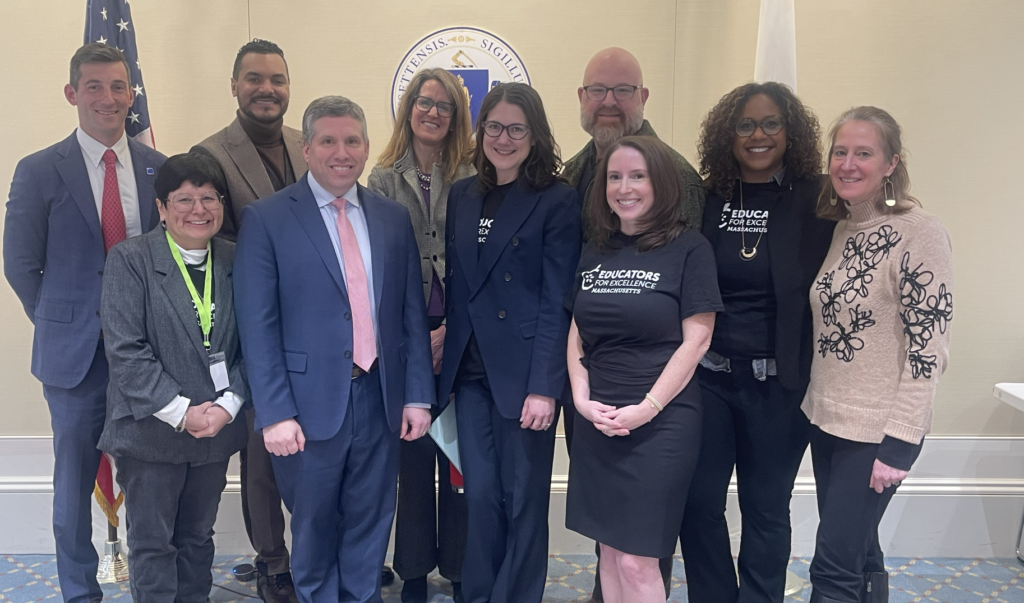
“It was important for me to show up at the State House because literacy is something that we live every day with our students. Showing up was my way of making the voices of my classroom and community visible and real to lawmakers. When educators take the time to be in those spaces, it reminds decision-makers that the outcomes of their policies affect real students sitting in real classrooms across Massachusetts.” — Diarmaid King, High School Teacher
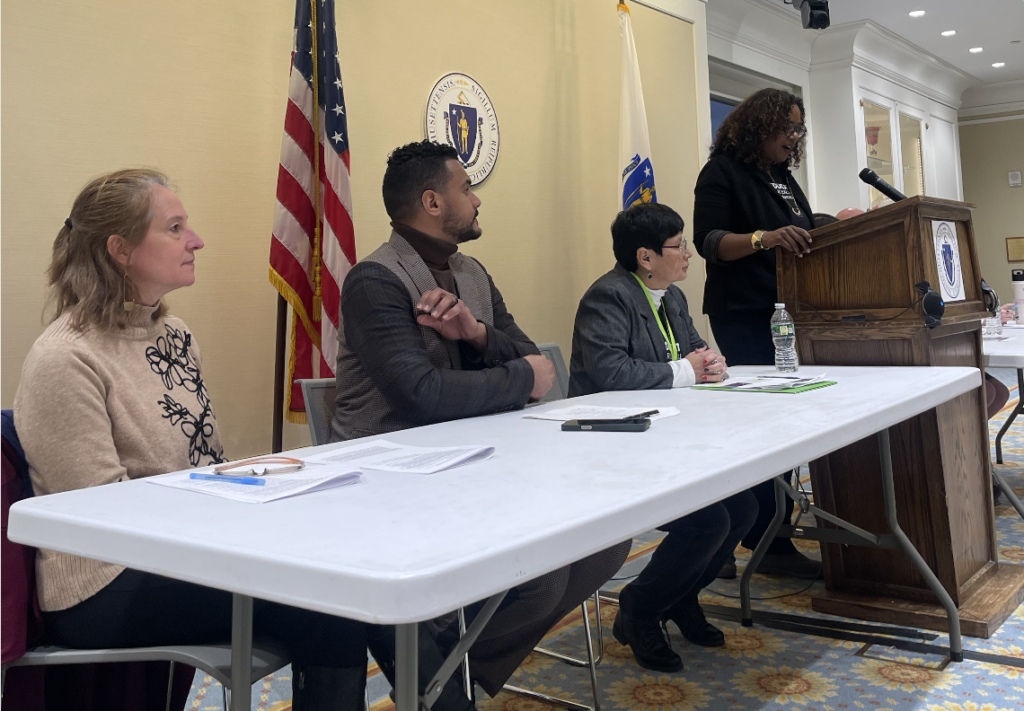
On February 18, 2026, E4E-MA Executive Director Lisa Lazare brought together Massachusetts educators, policy experts, and legislators at the State House for the “Right to Read is the Right to Succeed” panel, a conversation about the Commonwealth’s literacy crisis and what strong implementation of the Right to Read Act must deliver. Teachers were front and center, sharing their classroom experiences and making the case for why this legislation matters in this moment.
As the bill heads toward a final version and the Governor’s signature, let’s recap how the day went.
The Numbers Behind the People
Behind each number is an actual child struggling to read. Six in 10 Massachusetts third graders cannot read proficiently. The gaps are even wider for students of color: 78% of Black fourth graders, 79% of Hispanic students, and 80% of economically disadvantaged students are reading below grade level. As few as 2 in 10 Black, Latino, and low-income students are reading at grade level.
“Strong implementation in the classroom means that educators will be given the time, materials, and resources they need to infuse a love of reading and literature, effective word attack skills, and comprehension strategies. A strong implementation would allow my students to develop and improve their reading and writing skills in their own way, at their own pace, and using their natural language and cultural abilities.” — Nelsy Peppler, ESL Teacher
What the Research Tells Us, and What Educators Know
During the panel, Dr. Heather Peske, President of the National Council on Teacher Quality, offered a national context. States like Louisiana and Mississippi have already seen reading proficiency climb after adopting science-of-reading approaches. Massachusetts is on a declining trajectory if it does not act, with projections showing that those states’ scores will converge with the Commonwealth’s by 2028.
Policy, though, lives in the classroom. Principal Antonelli Mejia of Boston Public Schools made the case that a vetted list of high-quality, research-backed curricula frees educators to focus their energy on instruction, rather than spending time finding and evaluating materials on their own. Reading Interventionist Michael Phaneuf emphasized that professional development is what makes any new curriculum work in practice. Nelsy Peppler and Special Education Teacher Abi Lora spoke to the students most affected by the literacy gap, and Mass Reads Parent Advocate Jill Norton reminded the room that families are ready and engaged partners in this work. The panel was moderated by Luisa Sparrow, Massachusetts’ 2025 Teacher of the Year.
When Legislators Listen
State Senator Sal DiDomenico, the bill sponsor and one of the Legislature’s chief negotiators on the Right to Read Act, joined E4E’s invitation to deliver closing remarks. He was direct: “Six out of ten kids in third grade are not reading at grade level. Something is wrong here.”
He committed to moving the bill through the conference committee in the coming weeks, with a final bill to the Governor’s desk to follow. Senator DiDomenico has noted publicly that he chose to align with classroom educators on this issue because of who is leading the campaign.
“I was very impressed and inspired to hear Senator DiDomenico’s talk on moving the bill forward. It was inspirational to see that he is clearly invested in the work that educators do every day. Even more importantly, it is quite apparent that he has heard from MA citizens and educators about the work needed to make MA number one in literacy. I look forward to working with him and his staff to move this bill forward.” — Nelsy Peppler
A Full Day of Showing Up
Ten E4E educators met with bill sponsors, including Representative Catala, Senator Lewis, and the Office of House Speaker Ron Mariano. They delivered one-pagers to every key legislative office, thanked legislators for their leadership, and shared what this bill means for their classrooms and their students.
“I have always wanted to change the world, or at least attempt to have a positive effect on individuals in my life. So, when the opportunity came up to attend such an event at the State House in person, I was eager to do my small part. It was such an educational, inspirational, and invigorating day — I wish it could happen for all important legislation!” — Nelsy Peppler
What Comes Next
A final bill is within reach. The conference committee is moving, the Governor’s desk is in sight, and E4E educators are well-positioned to remain an important voice as this legislation moves toward the finish line.
Sign our petition urging lawmakers to deliver a strong final bill that includes high-quality, vetted curriculum; meaningful professional development; and the supports that every student, especially English learners, students with disabilities, and students of color, deserves.Want to stay involved?
Sign our Declarationto become an official E4E member.
Currently Reading
Massachusetts Educators Push for Literacy Reform at State House Panel